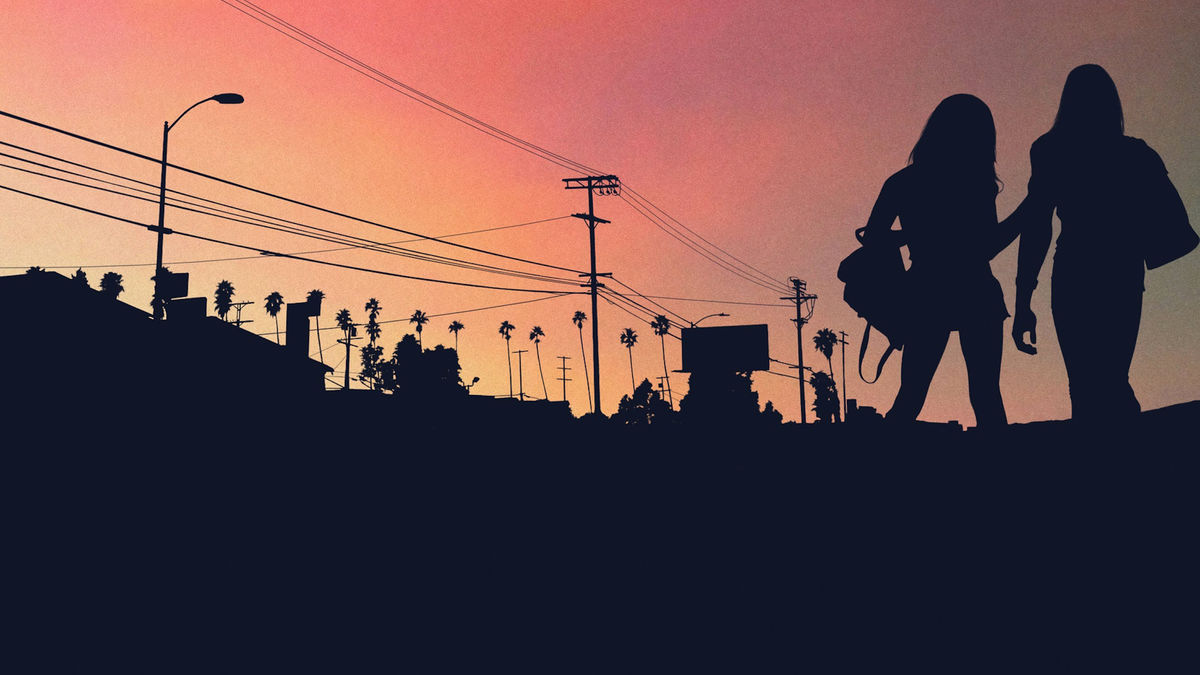
Sean Baker’s film, Tangerine was met with high praise from critics for its diverse story telling and cinematic flare that happens with just an iPhone. However, scholars and members of the LGBTQ+ community, specifically black trans women, see it as another cliché film that’s profiting off a minority group. It doesn’t help that the film is directed and written by a two white cis-gendered males. Morgan Collado from Autostraddle put’s it in a pretty straight forward way, “And while the two stars did have a lot of input into the making of the script, white men are still the ones who get the credit.” This film depicts black trans women, as “The Four ‘P’s’: Prostitute, Punchline, Psycho, and Poor Thing,” as do so many other forms of media. Tangerine crosses off at least 3 of the 4 on that list (Juzwiak 1). The critics justify this with the line “at least they’re being represented.” I think many LGBTQ+ individuals, including myself, are past the “at least we’re represented” stage and are ready for the “finally I’m being represented in a non-stereotypically and positive light” stage.
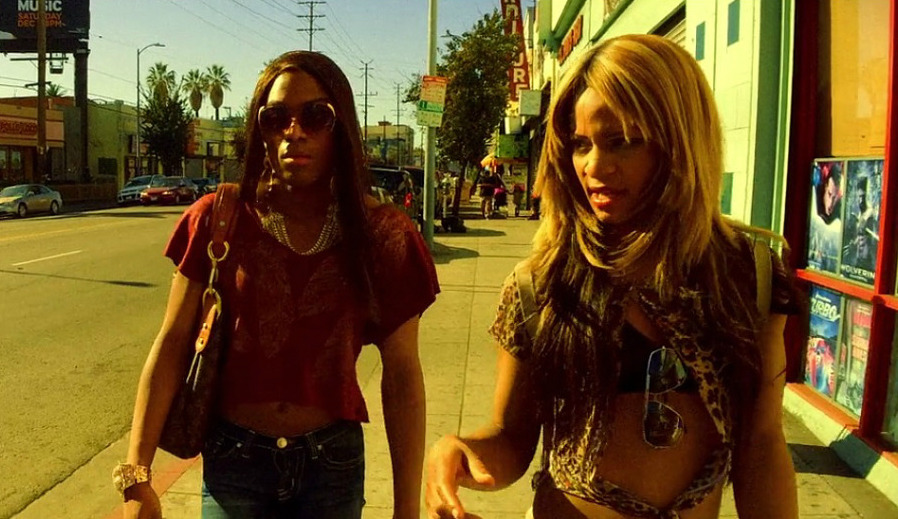
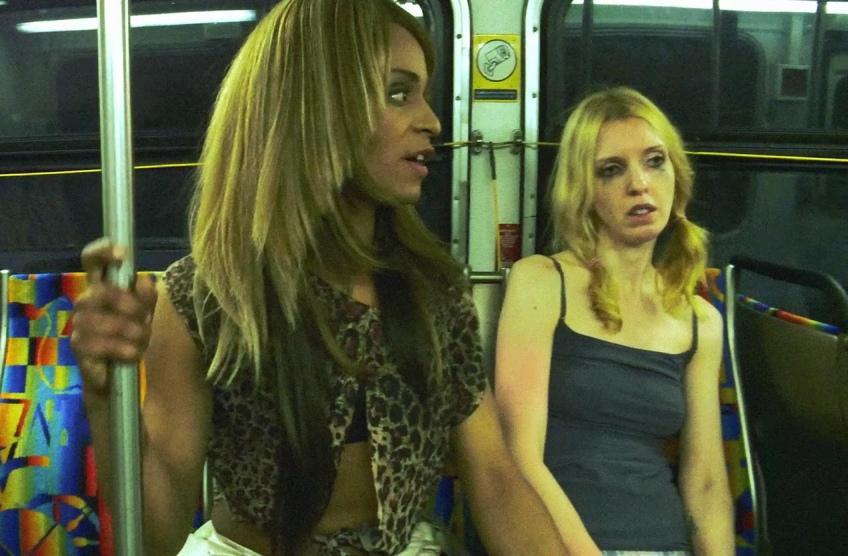
To be honest, I’m indifferent about this film. On one end, this is one of the first films I’ve seen where the main characters are part of the LGBTQ+ community in an intersectional way. On the other end, these characters are based off of multiple stereotypes and tropes of both black women and trans women; loud, violent, lower/middle class, etc. For example, the main character, Sin-Dee embodies all of the above tropes throughout the entirety of the film. For example, she is loud when she is screaming/ranting up and down the streets of LA, violent when she beat Dinah (the girl that her current boyfriends is cheating on her with). Even more so, she is part of the lower/middle class as she and Alexandria are seen multiple times walking all across LA and using public transportation. These constant portrayals creates this harmful intersection that audience members will gravitate to for comic relief and apply to their everyday lives. The reassuring factor of this film is that these characters are played by actual trans women which is the most progressive aspect of this film.
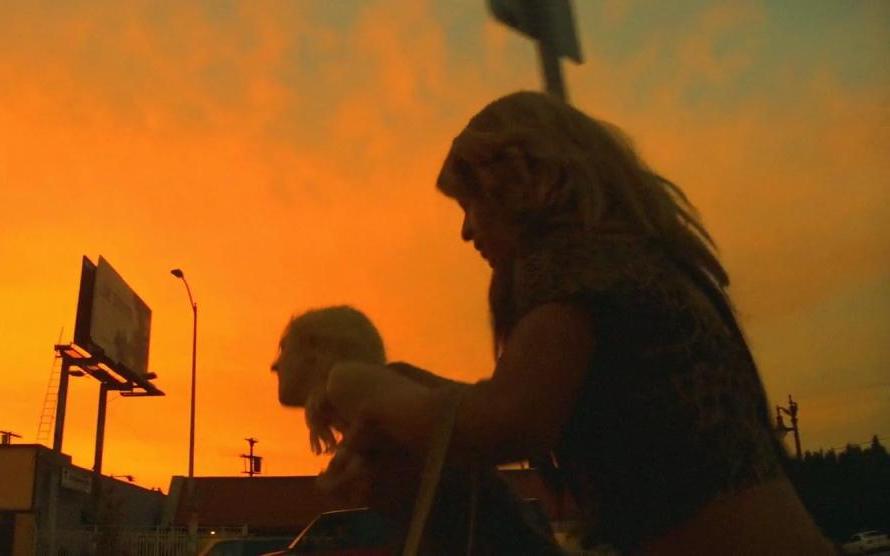
Overall, I understand the point of trying to create a story of a certain minority group. I’m not saying that this story shouldn’t be told; by all means these characters being minorities is more reason why this story should be told. However, there isn’t much of a story. The “primary plot is so simplistic it’s insulting”, not to mention the plot is written strictly around these negative stereotypes (Juzwiak 1). Maybe if the plot was more developed and the main characters didn’t fall into their stereotypical tropes I would have enjoyed this movie. As well, people focusing strictly on the fact it was amazing for the reason it was shot on an iPhone and not critiquing the story itself is detrimental to minority groups that are being represented in the film. All in all, I appreciate the efforts exhibited in the film’s cinematography, but felt as though the storyline and message behind it all was lost in the background and therefore, created and negative outcome for me personally.
 Kelsey Hamrick
Kelsey,
I definitely agree with everything you said. Coming into watching this film, I had high expectations of the representation of trans women due to the critics high praise. However, I was let down as well. The fact that they made Sin Dee such an unlikeable character, along with having her follow harmful tropes that you mention, felt like a slap in the face to be honest. The movie couldn’t really let me empathize with the character (and I don’t mean pity); I felt very detached from the film because of this. I also agree with you about the plot – the plot itself even followed the four P’s, especially Psycho, way too closely.
Another thing that bothered me was in the very beginning, Sin Dee and Alexandra complain about how their arm muscles won’t disappear, and how they’re too manly. This reiterates the stereoptical expectation of women not being able to look muscular, which not only harms cis-gender females, but trans women as well. It harms their identity. This is not the representation we want to see, following gender expectations and binaries. Like you said, the LGBTQ+ community is ready to be represented in a positive light, and not just to be represented for representation’s sake.
LikeLiked by 1 person