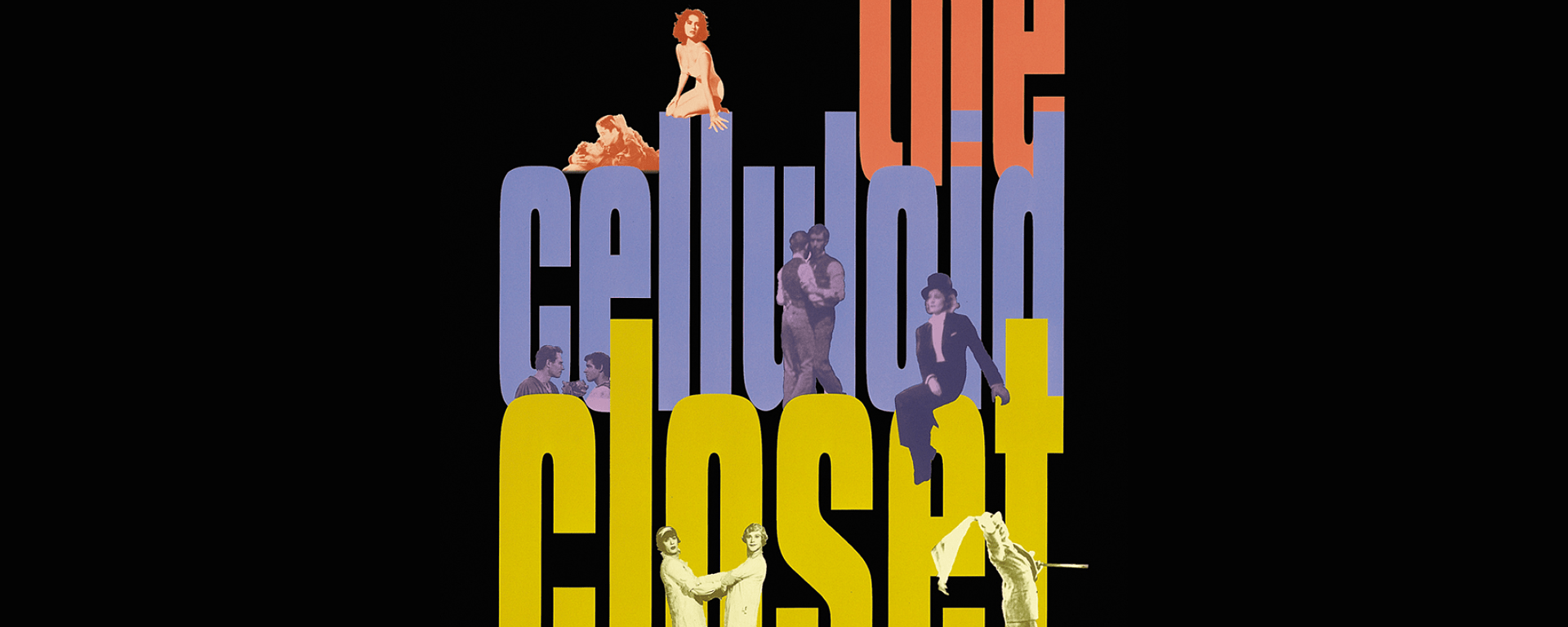
The documentary The Celluloid Closet explores the relationship between various personnel in the film industry and their outlook on the treatment of LGBT+ characters in film, including personal stories. The film opens up on blatant scenes of men kissing men and women kissing women in black and white pictures. This was one of many aspects from The Celluloid Closet that took me by surprise; how open these homosexual kisses were being shown in films from the early 1990’s. Then you come to realize that these films were made before censorship was in play. The PCA (Production Code Authority) enacted these set of rules that closely related to conservative, religious guidelines; eliminating the representation of most LGBT characters from films. This was the start of how the LGBT+ community would face years of oppression both on screen and in real life.
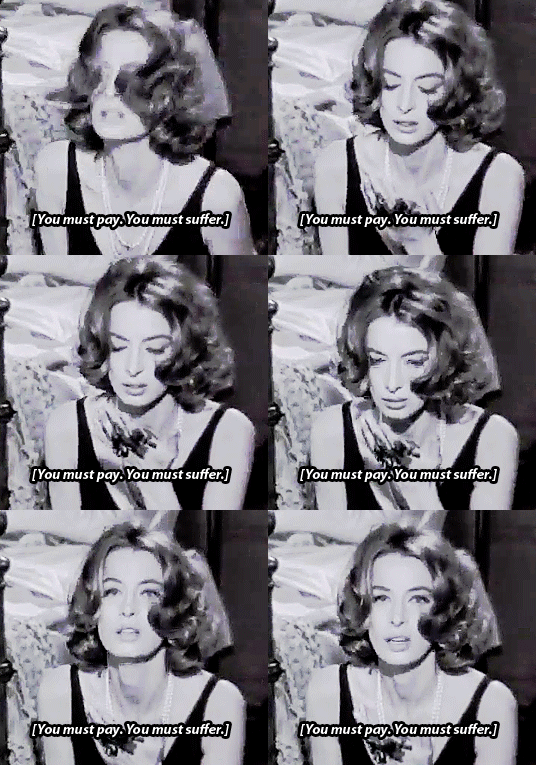
As the film progresses the viewers are made to watch these vulgar montage sequences. One is a series of death scenes consisting of only LGBT characters and the other is a montage of characters using the term “faggot” in various ways; mainly in a derogatory sense. Both of these scenes struck me at my core; more-so the ‘faggot” montage. Growing up I knew that word was used to make fun of gay people but as I got older and realized my own sexuality and embraced it, this term seemed to be the worst derogatory term you could use. So when I heard it be so casually used over and over again in these films I really questioned the point of this censorship if it allowed for this sort of hate speech. Moving on, the death montage surprised me in the fact that there were so many LGBT characters dying in the 90’s as there are now. What I mean by this is that the Bury Your Gays trope is still very prevalent in todays media, both in film and television. This trope is a homophobic cliche where “these characters are nominally able to be viewed as more expendable than their heteronormative counterparts” (TV Tropes 1). This trope is detrimental to the LGBT community because it makes queer people watching these movies or TV shows think they can’t have a happy ending. I think filmmakers forget how crucial of a medium there are in, films are something society bases most of their understanding of minorities.
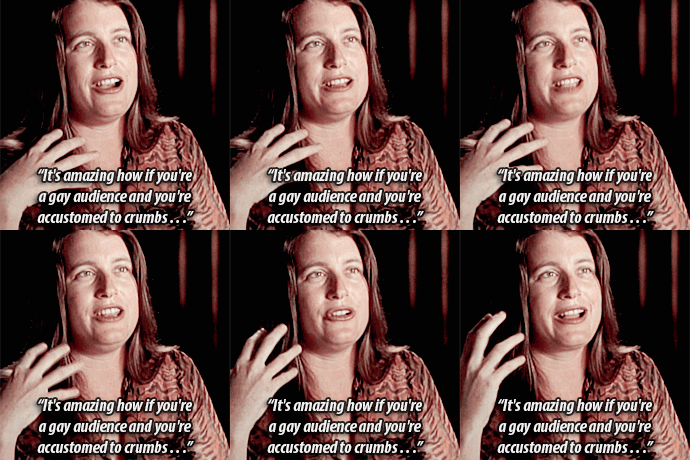
This goes into the the more intimate and affectionate scenes with gays and lesbian characters. As the film states very well, society is often uncomfortable when watching a gay sex scene between two men but not lesbian sex scenes. Why is this? This uncomfortableness that the audience feels when watching two men being slightly intimate with each other is rooted in toxic masculinity. The pressure from society for men to be extremely masculine no matter what; this gentle intimacy that the two men share disrupts this narrative. However, there is no toxic femininity, women being gentle during intimacy is the norm in society, that’s why seeing two women have sex isn’t as hard to watch as two men. This doesn’t excuse the fact that lesbians are constantly being over-sexualized, as these sex scenes are often not needed but used as a moment of pleasure for male viewers. If these representations don’t change in the media, then we can’t expect them to change in our real lives, because society latches onto what we see in films.
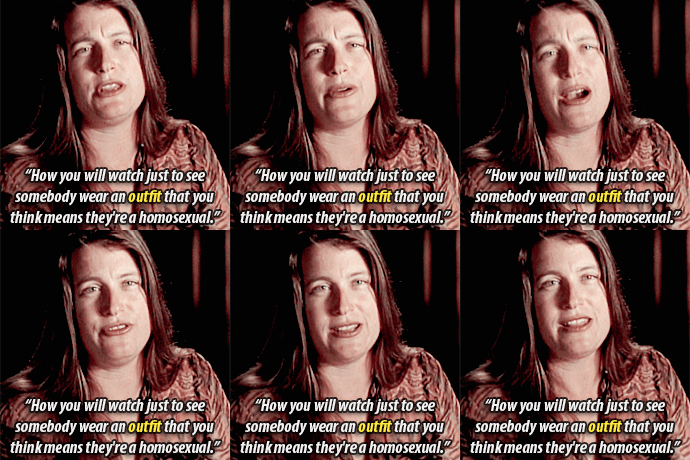
One moment I really enjoyed and could relate to was finding the subtext of gay characters in “straight” films. I often find myself watching films and television shows in a queer lens no mater if there are visible queer characters or not. I’d like to think it comes out of a feeling of hope, that maybe these two characters were written to be queer but someone higher up dismissed the idea all together. I still do this, I’m always catching subtext between two characters of the same gender, wether its a glance that’s a little too long for something friendly, or it’s an outfit that they wear. I find it even more entertaining this way, but then again it’s not something I can necessarily turn off and on when I’m watching these films. It’s an inherent trait that most queer audience members have because it’s how we view the world.
All in all, this film made me realize, that sadly not much has changed. I often think about how our society has resorted to these conservative views right when it feels like we are becoming more liberal. How is it that on-screen gay kissing and sex scenes were acceptable in the early 1990’s and not now? How are we just now getting away from the negative stereotyping that’s been shaming the LGBTQ+ community for so long?
 Kelsey Hamrick
Talking about gay sex scenes like you did in your blog, you commented on how audiences view male on male sex scenes differently than female on female sex scenes. Lesbian sex scenes are viewed as erotic and sensual while gay sex scenes are uncomfortable to watch. You mentioned that it is because of toxic masculinity and I completely agree.
I grew up in a conservative small town where being gay was rarely heard of. I was surrounded by toxic masculinity. And every time there is a male sex scene on-screen during a movie (which is not that common), my initial reaction is to get uncomfortable because I think “What if someone in the crowd doesn’t like it?” My first thought is regarding how the straight men in the room feel about the scene. I do it subconsciously even though I am a gay man. It still happens during lesbian sex scenes but not to the extent of male sex scenes. I find it interesting how those ideals were imprinted on me and still have effects on me now.
LikeLiked by 1 person
I think your comment and shock about how little things have changed since when the movie was made really speaks to me. Even earlier today I was in a meeting with a professor and talking about this movie. I said it was shocking to me that in 2020, a movie made in the early to mid-1990s still rang true and that we had moved so little over the last 25+ years.
We went from LGBTQ+ characters being banned from the movie screens, and filmmakers were reduced to subtext, to when LGBTQ+ characters were blatantly shown in the 1980s and 90s. But we haven’t moved from there. When I look at how queer characters were treated at the time of the movie, I see little movement. Sure, we’ve seen some good things, especially in TV. But overall we still aren’t seeing a lot of queer characters who end happy and healthy, and I think that’s a problem.
There are still times when I think the 90s wasn’t that long ago. But it’s been over 20 years. It’s a lot farther away than we think. When I look at the change from the 1950s to the 1970s even in overall sexuality and sexual freedom, it seems like such a massive change. But now, from 1995 to 2020 (a quarter of a century later), it seems like we’ve moved so little. Maybe it’s perspective, maybe it’s because I’m moving through it and not looking back on it.
LikeLiked by 1 person
I think you were spot on with the comment about toxic masculinity and the role it plays in popular media. Sex scenes between two men are seen by audiences as uncomfortable, and yet sex scenes between two women are seen as erotic and sensual. Do you think this has to do with how the female body has long been depicted in art? For centuries, the “male gaze” has dominated the way women are depicted in visual medium. A woman’s body is often separated from her identity, and displayed only as an object of visual pleasure. The female nude is seen in culture as sensual, erotic, and artistic. Along with the problems of toxic masculinity in society, I think this can explain why gay and lesbian sex scenes are portrayed in film so differently.
LikeLiked by 1 person