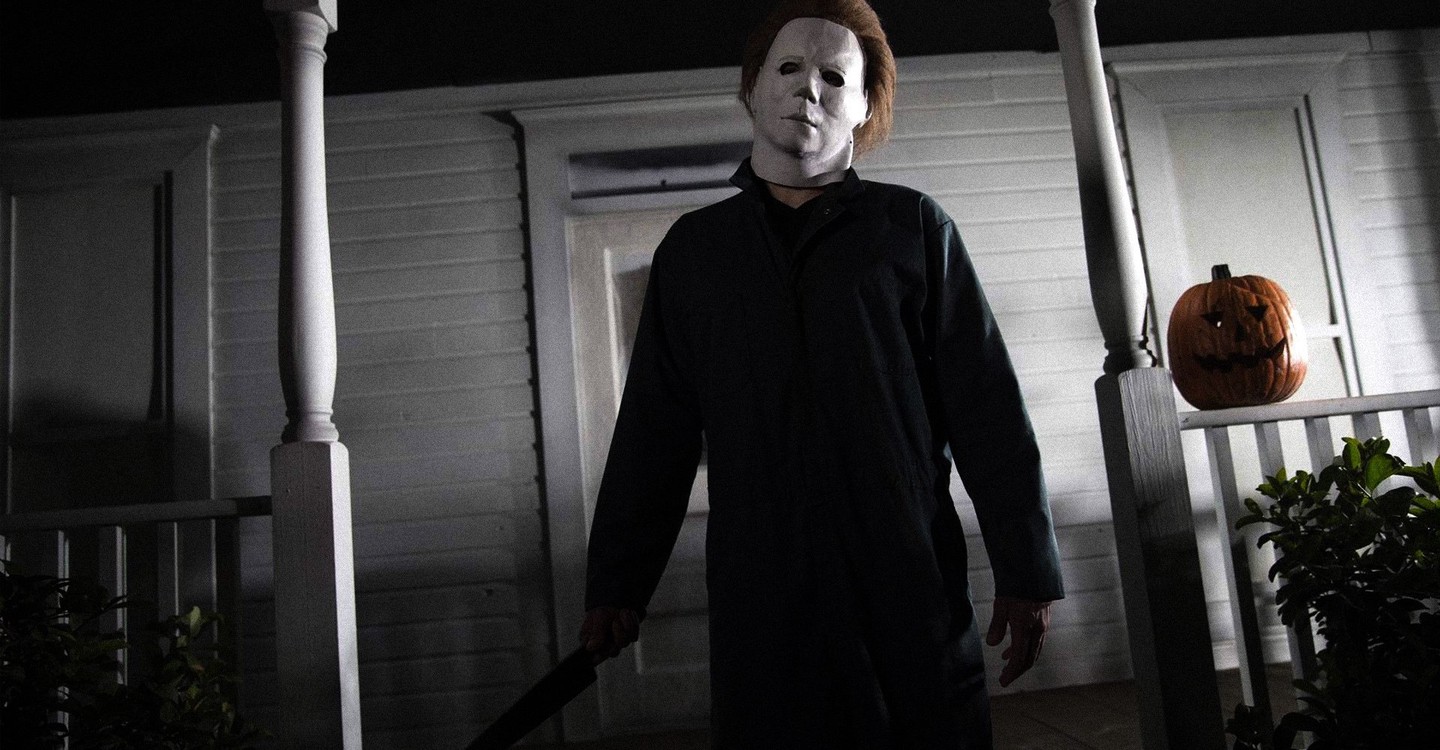
Horror films have been around since the 1920’s but the peak of this genre was in the 1970’s with the introduction of slasher films. This specific genre was seen as an outlet for many Americans to escape to, it was a safe and controlled way to address the current crisis in America which was marked by societal uncertainty about the future and anxiety. Horror films put a face to the fears that young people in America were growing up with, making them feel as if they can conquer them. Slasher films in specific, ironically created this fear within youth culture about being punished for the sinful behaviors depicted in these films; like drinking, having sex, and doing drugs. The 1978 film Halloween directed by John Carpenter and staring Jamie Lee Curtis is no different.

The female character’s depicted in Halloween, and horror films overall, have a large effect on how feminism can be applied to these films. The book Film Feminisms: A Global Introduction written by Kristin Hole and Dijana Jelača dive deeper into these feminist motifs by introducing the Final Girl Trope, defined as the last girl or women alive to confront the killer. This creates a vast difference between the characters in horror films, specifically the female characters. Why was Curtis’ character, Laurie, chosen to be the Final Girl over the other female characters of Annie and Lynda?
The answer goes back to the idea that slasher films created this fear within their viewers to not do the sinful acts depicted on the screen or else you’ll get killed. One major contender was underaged and/or premarital sex and the thematic dangers of the act. In slasher films, those who committed this act were the first to die and often in a brutal, gruesome manner. This created the fear that one’s survival was directly related to one’s sexual experience. In turn, this is an underlying reason for the survival of Laurie, as she was “sexually less available” compared to her female friends (Hole & Jelaca 282).
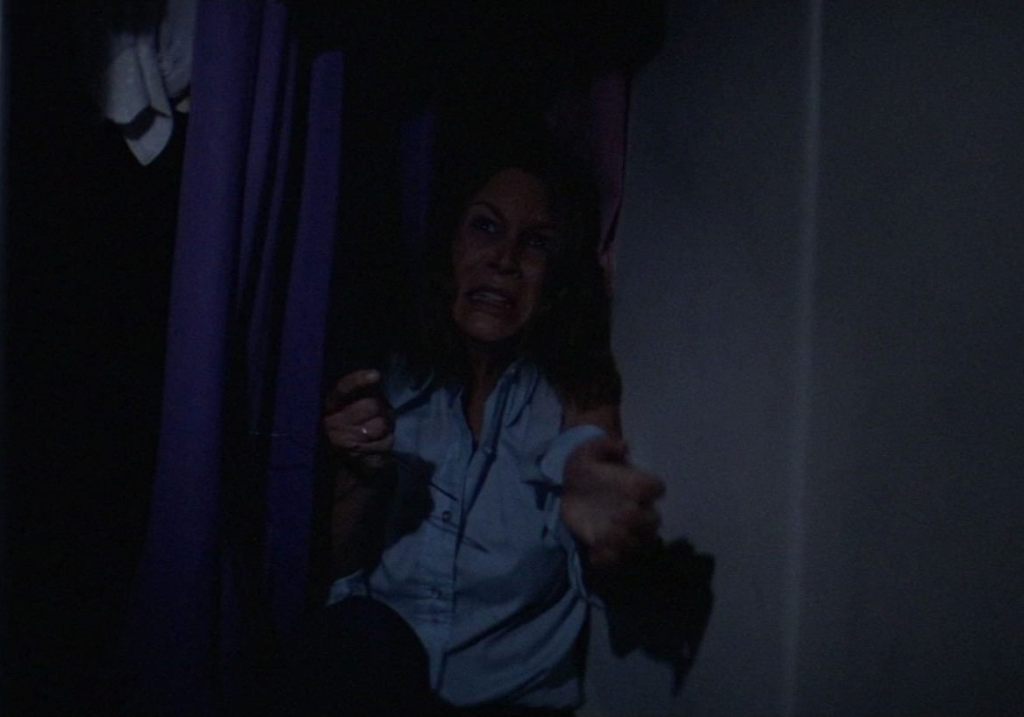
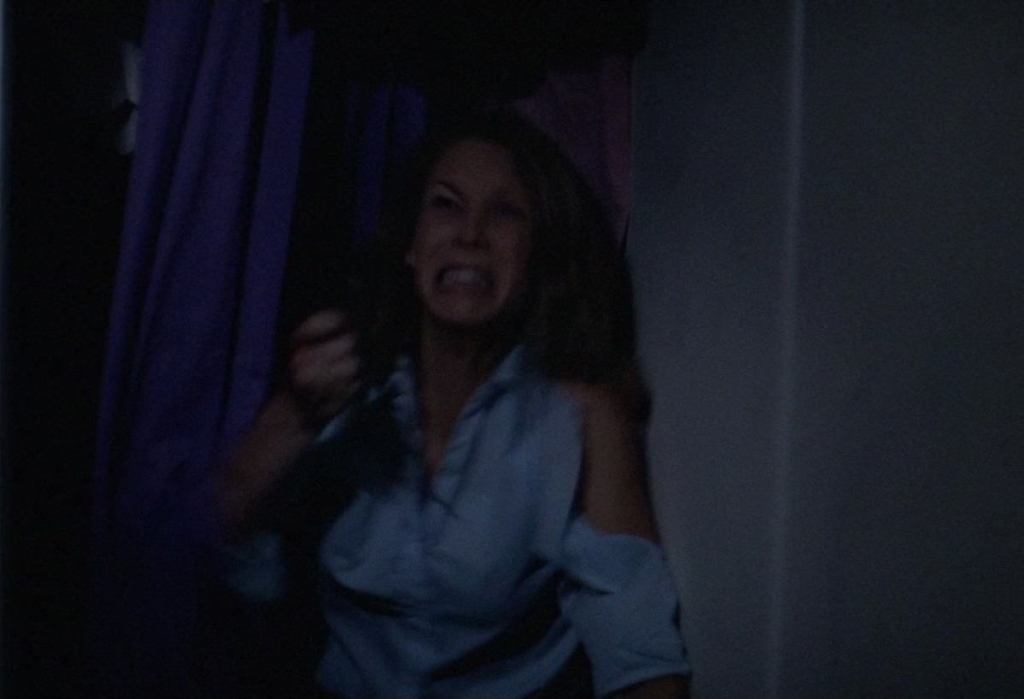
The Final Girl Trope also includes this notion that the last girl standing is “always somewhat boyish” and doesn’t care too much about her feminine features (Hole & Jelaca 282). This is illustrated in Laurie’s character as she dresses in button ups and pants versus her friends who dress in blouses and skirts. As well, Laurie is extremely intelligent, a gendered trait often associated with men, compared to Annie and Lynda; exemplified in the classroom scene when she’s quick to answer the teacher’s question even if she was distracted by Meyer’s staring at her outside of the window.
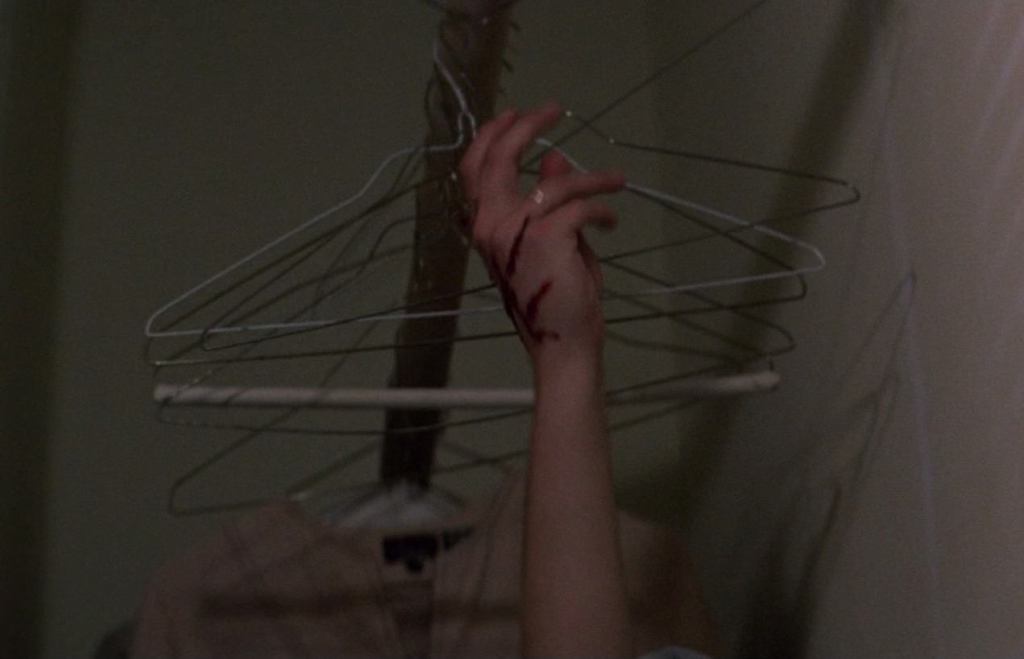
Interestingly enough, the role of men in Halloween further the feminist ties to the film. The fact that the trope is blatantly and always a girl injures the idea that she must “act as her own savior because her male companions prove less capable in fighting off the killer” (Hole & Jelaca 283). Furthermore, Michael Meyer’s character symbolize the male gaze, which makes Laurie’s defensive tactic much more ironic. She uses a hanger, which represents a pro-choice movement, to stab Meyer’s in the eye, basically disrupting the male gaze with feminism.
 Kelsey Hamrick
Kelsey,
Your discussion of what makes a “Final Girl” is really interesting. We never really think about it while watching, but the character or characters that survive a horror film are almost always more conservative and intelligent. On the surface level, we as viewers might think that is because of their intelligence. As the smart one of the group, of course they act logically and know what to do in order to make it out alive. This is problematic, however, because then it seems to imply that the less-conservative (more scandalous) characters are unintelligent. It is as if we are being told that if you want to be smart, you cannot sin, which is just unrealistic. It is very interesting to see how easily Laurie, Lynda, and Annie fit into these categories and what that means for viewers.
LikeLiked by 2 people
I’m so glad you brought up the term “boyish”. Jamie Lee Curtis’ character isn’t the most feminine, but I find it amusing that male characteristics are assigned to her because of this, however subliminally. It is also amusing that just because she wears pants and button downs and answers questions in class she is seen as more masculine. Contrarily, I find her personality to be the most nurturing which often has very feminine connotations. She illustrates the “final girl” trope extraordinarily because of the characteristics you noted.
LikeLike